
candidacy overview
Most healthy adults qualify - but the only way to know for certain is a free assessment. This guide covers every factor that affects candidacy, including the concerns patients worry about most: pain, fear, bone loss, age, and cost.
Most adults qualify
Free assessment
30-minute consult
Candidacy overview
Who is a good candidate for dental implants?
The short answer: most healthy adults. Here's a more detailed breakdown of who qualifies outright and what can be addressed beforehand.
Who do implants help?
Even if another clinic told you that you're not a candidate, it's worth a second opinion. Bone grafting and sinus lifts have dramatically expanded who qualifies over the past decade. The assessment is free - there is nothing to lose by finding out.
The assessment
What we look at during your free consultation
A thorough candidacy assessment covers five areas. Each one affects the treatment plan, timeline, and cost.
Bone density
Volume and quality of jawbone at the implant site via 3D imaging
Gum health
Active gum disease must be resolved before placement
Overall health
Diabetes, medications, and conditions that affect healing
Bite and spacing
Available space, adjacent teeth, and bite alignment
Imaging
X-rays and 3D CBCT scan to plan the exact implant position
Patient concerns
The questions patients ask before they book
Every concern below is one we hear every day. Watch the short video, then read the answer.

COMING SOON Video: "Age concerns"
Days 1-3
Mild swelling and soreness. Most patients manage with ibuprofen. Soft food diet. Most return to work day 1–2.
Week 1–2
Gum tissue heals over the implant. Temporary crown in place. No significant restrictions.
Months 1–4
Osseointegration - bone fuses with the titanium post. No discomfort during this phase.
Months 3–6
Final crown fitted. Full function and normal eating restored.
Sedation
Sedation options - you're in control
From light oral sedation to full IV sedation, you choose your comfort level. Nobody has to white-knuckle through this procedure.
Oral sedation
most common
A pill taken 30–60 minutes before your appointment. You remain conscious but deeply relaxed. Requires someone to drive you home.
Nitrous oxide
Laughing gas
Inhaled through a small mask throughout the procedure. Wears off within minutes - you can drive yourself home. Mild, pleasant relaxation.
IV sedation
Deep sedation
Administered intravenously for patients with severe dental anxiety or complex cases. You'll have little to no memory of the procedure. Requires an escort home.
Meet our dentists
The doctors assessing your candidacy
Every implant placed through Ontario Implants is performed by an experienced implant dentist with extensive hands-on training.
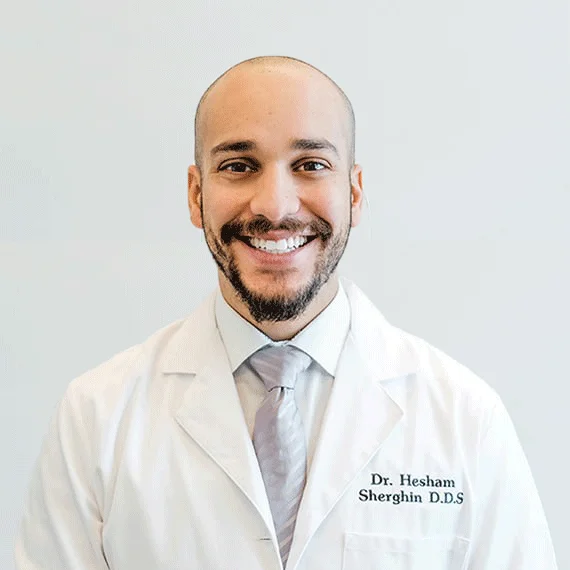
Dr. Hesham Sherghin
Dentist
D.D.S.
M.Sc. x3
M.B.A.
15 yrs experience

Dr. Steve Chang
Dentist
D.D.S.
M.Sc. x2
F.R.C.D.C.
10+ yrs experience

Dr. Jaskaran Takhar
dentist
D.D.S.
B.Sc.
10+ yrs experience
FAQ
Candidacy questions answered
The questions patients most commonly ask before their free consultation.